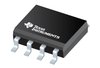

更多产品参数
Operational Amplifier, 2 Func, 7000uV Offset-Max, BIPolar, PDSO8
制造商:
Texas Instruments
制造商型号:
LM2904PSR
符合标准:
Rohs 符合
不含铅
数据手册:
文档下载
LM2904PSR数据表
参考设计(10)
Flyback, Buck for Automotive (52V @ 0.04A)
PMP1941.2: A triple-output non-isolated flyback converter provides a regulated low voltage and two high voltage rails. A buck converter with an input transient voltage-clamping circuit produces a 5V rail. The addition of a dithering circuit creates spread-spectrum operation on the switching frequency to lower EMI, making this circuit suitable for automotive use.
Flyback, Buck for Automotive (4.5V @ 0.05A)
PMP1941.5: A TPS70501 linear regulator supplies a 4.5V output in parallel with the 5V rail. This provides a low current backup voltage when the the buck converter is disabled.
Flyback, Buck for Automotive (3.7V @ 0.5A)
PMP1941.3: A triple-output non-isolated flyback converter provides a regulated low voltage and two high voltage rails. A buck converter with an input transient voltage-clamping circuit produces a 5V rail. The addition of a dithering circuit creates spread-spectrum operation on the switching frequency to lower EMI, making this circuit suitable for automotive use.
PMP1941 Flyback, Buck for Automotive (4.5V @ 0.05A) | TI.com
PMP1941: A triple-output non-isolated flyback converter provides a regulated low voltage and two high voltage rails. A buck converter with an input transient voltage-clamping circuit produces a 5V rail. The addition of a dithering circuit creates spread-spectrum operation on the switching frequency to lower EMI, making this circuit suitable for automotive use.
Flyback, Buck for Automotive (5V @ 0.5A)
PMP1941.4: A low cost TPS40200 buck converter produces a 5V @ 0.5A output. The input voltage is clamped to 30V max with the addition of a transient voltage-clamping circuit. A dithering circuit creates spread-spectrum operation on the switching frequency to lower EMI, making this circuit suitable for automotive use.
PMP30047 Two Elements Lead-Acid 16V…32V@2A Battery Charger from 170VAC to 270VAC Reference Design | TI.com
PMP30047: A quasi-resonant isolated flyback is employed to charge two lead-acid battery elements, starting from high-line mains. The converter accepts two external signals (referred to secondary side) to provide the reference voltages, which set output voltage and current. The converter shows good wide-range efficiency thanks to valley-switching modulation.
Flyback, Buck for Automotive (82V @ 0.03A)
PMP1941.1: A triple-output non-isolated flyback converter provides a regulated low voltage and two high voltage rails. A buck converter with an input transient voltage-clamping circuit produces a 5V rail. The addition of a dithering circuit creates spread-spectrum operation on the switching frequency to lower EMI, making this circuit suitable for automotive use.
Flyback, Buck for Automotive (82V @ 0.03A) - PMP1941.1 - TI Tool Folder
PMP1941: A triple-output non-isolated flyback converter provides a regulated low voltage and two high voltage rails. A buck converter with an input transient voltage-clamping circuit produces a 5V rail. The addition of a dithering circuit creates spread-spectrum operation on the switching frequency to lower EMI, making this circuit suitable for automotive use.
Flyback, Buck for Automotive (4.5V @ 0.05A) - PMP1941.5 - TI Tool Folder
PMP1941: A TPS70501 linear regulator supplies a 4.5V output in parallel with the 5V rail. This provides a low current backup voltage when the the buck converter is disabled.
PMP1941 Flyback, Buck for Automotive (4.5V @ 0.05A) | TI.com
PMP1941: A triple-output non-isolated flyback converter provides a regulated low voltage and two high voltage rails. A buck converter with an input transient voltage-clamping circuit produces a 5V rail. The addition of a dithering circuit creates spread-spectrum operation on the switching frequency to lower EMI, making this circuit suitable for automotive use.

CoreStaff Co Ltd
分销商编号:
st29284743
交货地:
中国大陆
港台地区
单价:
- 阶梯 人民币价格(含税) 美元价格
- 1+ ¥16.8727 $2.1650
- 10+ ¥7.9570 $1.0210
- 50+ ¥5.5411 $0.7110
- 100+ ¥4.3409 $0.5570
- 500+ ¥4.0993 $0.5260
- 1000+ ¥3.8577 $0.4950
- 2000+ ¥3.7642 $0.4830
- 4000+ ¥3.6629 $0.4700
请输入数量:
-+
总计:
库存/包装:
1,839
起订量:
1
递增量:
1
生产日期:
2006
寄送至:
中国大陆境内
运费规则:
¥870.00
起订
, 查看细则
