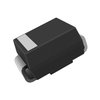

更多产品参数
Trans Voltage Suppressor Diode, 1500W, 15V V(RWM), Bidirectional, 1 Element, Silicon, DO-214AB
制造商:
Littelfuse Inc
制造商型号:
SMCJ15CA
符合标准:
含铅
数据手册:
文档下载
SMCJ15CA数据表
参考设计(4)
Analog Front End for Motor Electronic Overload Relays with Enhanced Current Range
TIDA-00191: This reference design is the analog front end (AFE) for an electronic overload relay, used for monitoring and protecting motors from overcurrent or undercurrent events. It is an ideal tool for developers creating overload relays for sensitive AC motors in industrial applications. This programmable gain amplifier (PGA) based analog front end is intended to be an easy evaluation platform for an accurate, industry-leading 10:1 full load ampere (FLA) range and is repeatable over a -10 to +70°C temperature range.
Zero drift PGA based Analog Front End Design for Circuit Breakers (ACB/MCCB-ETU)
TIDA-00130: This reference design is intended for use in molded case circuit breakers (MCCB) electronic trip units. The programmable gain amplifier based design acts as the current monitoring for over-current earth fault relays. Utilizing a zero drift programmable amplifier, this design provides a ±10 % pick-up (A) accuracy and time delay (s) accuracy of 0 to -20%. Additionally, this solution was designed to handle harsh environment conditions by including features such as ambient insensitivity from -10 to 70 ⁰C and high electromagnetic immunity. Finally the analog front end of this design interfaces seemlessly with the TI MSP430 MCU for quicker evaluation and faster time-to-market.
Low-Power, Low-Noise Analog Front End Design for Circuit Breakers (ACB/MCCB-ETU)
TIDA-00128: This reference design is intended for use in molded case circuit breakers (MCCB) electronic trip units. The op amp based design acts as current monitoring for over-current earth fault relays. Utilizing a low cost op amp, this design provides a pick-up (A) accuracy ±10 % and time delay (s) accuracy 0 to -20%. Additionally, this design takes harsh environment conditions in mind with features such as ambient insensitivity from -10 to 70°C and high electromagnetic immunity. Finally the analog front end of this design seemlessly interfaces to TI MSP430 MCU for quicker evaluation and faster time-to-market.
Self or Dual-Powered Supply for Protection Relay, MCCBs & ACBs Ref Design
TIDA-00229: This power supply solution for Protection Relays & MCCBs handles both the current input from a Current Transformer (CT) or input from an Auxillary (Aux) source. The "self-powered" capability comes from being able to harness the power available in the grid through the CT. The flexibility of this solution's "dual-power" input comes from the ability to also handle the Aux input - which is often a battery source.

TME
分销商编号:
SMCJ15CA-LF
交货地:
中国大陆
港台地区
单价:
- 阶梯 人民币价格(含税) 美元价格
- 1+ ¥3.6979 $0.4800
- 10+ ¥2.8197 $0.3660
- 50+ ¥2.2804 $0.2960
- 100+ ¥2.0724 $0.2690
- 500+ ¥1.6410 $0.2130
- 1000+ ¥1.4792 $0.1920
- 1500+ ¥1.3867 $0.1800
- 3000+ ¥1.2635 $0.1640
- 6000+ ¥1.2172 $0.1580
请输入数量:
-+
总计:
库存/包装:
2,083
起订量:
1
递增量:
1
TME 其它编号产品
分销商编号:
SMCJ15CA-DC
起订量:
3
包装方式 * 包装量:
* 1
单价:
$0.2700
分销商编号:
SMCJ15CA-YAN
起订量:
1
包装方式 * 包装量:
* 1
单价:
$0.7290
分销商编号:
SMCJ15CA-TSC
起订量:
1
包装方式 * 包装量:
* 1
单价:
$0.4800
分销商编号:
SMCJ15CA-CDI
起订量:
5
包装方式 * 包装量:
* 5
单价:
$0.1610
分销商编号:
SMCJ15CA-BOU
起订量:
3,000
包装方式 * 包装量:
* 3,000
单价:
$0.2110
分销商编号:
SMCJ15CA-AO
起订量:
1
包装方式 * 包装量:
* 1
单价:
$0.4700
搜索更多的分销商结果
搜索
请输入完整或部分产品型号,最少 3 个字母或数字
