
更多产品参数
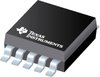
Power Supply Support Circuit, Fixed, 1 Channel, PDSO10
制造商:
Texas Instruments
制造商型号:
TPL5100DGST
符合标准:
Rohs 符合
不含铅
数据手册:
文档下载
TPL5100DGST数据表
参考设计(11)
Wi-Fi System Powered by 2 AA Batteries Extends Life By Using Long Power Off Periods Reference Design
TIDA-00372: TIDA-00372 is a power supply design for use with the CC3200 SimpleLink ™ wireless MCU. This design includes a boost power supply that enables the use of analog circuits such as sensor products that cannot operate at voltages available from two series connected AA Batteries. A nano-power timer enables long power-off cycles and increases battery life.
Humidity & Temp Sensor Node for Star Networks Enabling 10+ Year Coin Cell Battery Life Ref Design
TIDA-00374: This TI Design uses Texas Instruments nano-power system timer, SimpleLink™ ultra-low power wireless microcontroller (MCU) platform, and humidity sensing technologies to demonstrate an ultra-low power method to duty-cycle sensor end nodes. These technologies lead to an extremely long battery life: over 10 years with a standard CR2032 lithium ion coin cell battery. The TI Design includes techniques for system design, detailed test results, and information to get the design up and running quickly. This reference design uses the HDC1000. This reference design can also be used with the HDC1008, and HDC1050.
Humidity & Temp Sensor Node for Sub-1GHz Star Networks Enabling 10+ Year Coin Cell Battery Life
TIDA-00484: The TIDA-00484 TI Design uses Texas Instruments' nano-power system timer, boost converter, SimpleLink™ ultra-low power Sub-1 GHz wireless microcontroller (MCU) platform, and humidity sensing technologies to demonstrate an ultra-low power method to duty-cycle sensor end nodes leading to extremely long battery life. The TI Design includes techniques for system design, detailed test results, and information to get the design up and running quickly.
TIDA-00246 Generic Energy Harvesting Adapter Module for Thermoelectric Generators (TEG) Reference Design | TI.com
TIDA-00246: This TI Design aims at providing a generic solution for energy harvesting while giving a practical application application for thermoelectric generators (TEG). It is a fully programmable state-machine which runs at 60nA and can enable and disable key functions as they are needed by the system to optimize power consumption. TIDA-00246 acts as a BoosterPack for the MSP430FR5969 LaunchPad Development Kit (MSP-EXP430FR5969) for use as an ultra-low power state machine. For more information on II-VI Marlow: Click here.
TIDA-00374 Humidity & Temp Sensor Node for Star Networks Enabling 10+ Year Coin Cell Battery Life Ref Design | TI.com
TIDA-00374: This TI Design uses Texas Instruments nano-power system timer, SimpleLink™ ultra-low power wireless microcontroller (MCU) platform, and humidity sensing technologies to demonstrate an ultra-low power method to duty-cycle sensor end nodes. These technologies lead to an extremely long battery life: over 10 years with a standard CR2032 lithium ion coin cell battery. The TI Design includes techniques for system design, detailed test results, and information to get the design up and running quickly.
TIDM-WLMOTORMONITOR Wireless Motor Monitor Reference Design | TI.com
TIDM-WLMOTORMONITOR: This TI Design is inspired by the need to monitor the health of motors and machines to accurately predict and schedule maintenance (or replacement) while minimizing cost and down time during industrial production. Millions of industrial motors are monitored today with handheld or wired Piezo accelerometer sensing devices. The annual cost of monitoring these motors is approximately $300 per motor. Recent advancements in ultra-low-power processing technologies, radios, and piezo sensor miniaturization have enabled the development and deployment of low-cost, small motor monitors with wireless capabilities. These wireless motor monitors are powered by coin cells that have a battery life of more than 10 years. These systems provide the same broadband sensitivity as existing handheld systems, collect vibrational data, and perform spectral analyses on that data. This integrated intelligence lets you deploy and monitor these systems in difficult-to-reach locations. The money these capabilities save can pay for the systems within a few months. The wireless motor-monitoring TI Design uses two different, yet electrically equivalent, form factors for development and testing. These form factors include: In the modular form factor, TI LaunchPad™ Development Kits and EM connectors allow you to incorporate multiple radios and processors with energy-management and sensor subsystems. The compact form factor uses the MSP430™FR5969 ultra-low-power microcontroller unit (MCU) with a CC2650 BLE radio, but can be connected to multiple sensor boards. The standard sensor board supports a PCB Piezotronic vibration sensor. The 30-pin expansion connector on the small form factor board enables the base-board to be operated with the MCU, the CC2650 radio, or both. The system software assumes you are using both devices. This TI Design focuses on the compact form factor system.
Generic Energy Harvesting Adapter Module for Thermoelectric Generators (TEG) Reference Design
TIDA-00246: This TI Design aims at providing a generic solution for energy harvesting while giving a practical application application for thermoelectric generators (TEG). It is a fully programmable state-machine which runs at 60nA and can enable and disable key functions as they are needed by the system to optimize power consumption. TIDA-00246 acts as a BoosterPack for the MSP430FR5969 LaunchPad Development Kit (MSP-EXP430FR5969) for use as an ultra-low power state machine. For more information on II-VI Marlow: Click here.
TIDA-00484 Humidity & Temp Sensor Node for Sub-1GHz Star Networks Enabling 10+ Year Coin Cell Battery Life | TI.com
TIDA-00484: The TIDA-00484 TI Design uses Texas Instruments' nano-power system timer, boost converter, SimpleLink™ ultra-low power Sub-1 GHz wireless microcontroller (MCU) platform, and humidity sensing technologies to demonstrate an ultra-low power method to duty-cycle sensor end nodes leading to extremely long battery life. The TI Design includes techniques for system design, detailed test results, and information to get the design up and running quickly.
Energy Harvesting LaunchPad BoosterPack for Brushed DC Motor Control Reference Design
TIDA-00616: The Energy Harvesting LaunchPad for Brushed DC Motor Control is designed for charging a Li-ion or Li-polymer battery with solar energy, and subsequently using a voltage regulator to provide secondary system power to a TI LaunchPad and any peripherals connected the LaunchPad. The BoosterPack is designed for low power and automation applications, using an on-board nano-timer and dual H-bridge motor drivers that have integrated MOSFETs with an extremely low 45mΩ Rds(on).
Wireless Motor Monitor Reference Design
TIDM-WLMOTORMONITOR: This TI Design is inspired by the need to monitor the health of motors and machines to accurately predict and schedule maintenance (or replacement) while minimizing cost and down time during industrial production. Millions of industrial motors are monitored today with handheld or wired Piezo accelerometer sensing devices. The annual cost of monitoring these motors is approximately $300 per motor. Recent advancements in ultra-low-power processing technologies, radios, and piezo sensor miniaturization have enabled the development and deployment of low-cost, small motor monitors with wireless capabilities. These wireless motor monitors are powered by coin cells that have a battery life of more than 10 years. These systems provide the same broadband sensitivity as existing handheld systems, collect vibrational data, and perform spectral analyses on that data. This integrated intelligence lets you deploy and monitor these systems in difficult-to-reach locations. The money these capabilities save can pay for the systems within a few months. The wireless motor-monitoring TI Design uses two different, yet electrically equivalent, form factors for development and testing. These form factors include: In the modular form factor, TI LaunchPad™ Development Kits and EM connectors allow you to incorporate multiple radios and processors with energy-management and sensor subsystems. The compact form factor uses the MSP430™FR5969 ultra-low-power microcontroller unit (MCU) with a CC2650 BLE radio, but can be connected to multiple sensor boards. The standard sensor board supports a PCB Piezotronic vibration sensor. The 30-pin expansion connector on the small form factor board enables the base-board to be operated with the MCU, the CC2650 radio, or both. The system software assumes you are using both devices. This TI Design focuses on the compact form factor system.
TIDA-00616 Energy Harvesting LaunchPad BoosterPack for Brushed DC Motor Control Reference Design | TI.com
TIDA-00616: The Energy Harvesting LaunchPad for Brushed DC Motor Control is designed for charging a Li-ion or Li-polymer battery with solar energy, and subsequently using a voltage regulator to provide secondary system power to a TI LaunchPad and any peripherals connected the LaunchPad. The BoosterPack is designed for low power and automation applications, using an on-board nano-timer and dual H-bridge motor drivers that have integrated MOSFETs with an extremely low 45mΩ Rds(on).

Rochester Electronics
分销商编号:
未知
交货地:
港台地区
单价:
- 阶梯 人民币价格(含税) 美元价格
- 100+ - $1.3640
- 500+ - $1.2320
- 1000+ - $1.1330
- 10000+ - $1.0094
- 100000+ - $0.8457
请输入数量:
-+
总计:
库存/包装:
68,870
起订量:
100
递增量:
100
搜索更多的分销商结果
搜索
请输入完整或部分产品型号,最少 3 个字母或数字
